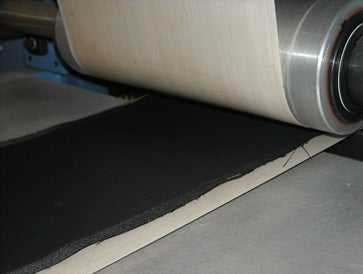
ELAT® Activated - 406 μm Plain Carbon Cloth
Key specs
- GDL material
- Carbon cloth
- GDL thickness
- 406 µm
- Microporous layer (MPL)
- No
- MPL sides
- None
- MPL type
- None
- PTFE treated
- No
- Application
- Flow battery, Direct methanol fuel cell (DMFC), Electrolyzer (type not specified), Batteries (other)
Description
ELAT® Activated Plain Carbon Cloth gas diffusion layers are excellent for flow batteries where it is critical to use a very thin electrode material. The excellent tensile and interlaminar shear strengths prevent fabric wrinkling. Activated ELAT® is designed specifically for liquid-type electrochemical reactors. The thickness of this GDL is 406 μm.
ELAT® - Activated Plain Cloth: Properties and Advantages:
Liquid reactant-consuming electrochemical devices require the liquid medium to fully access the electrocatalyst layers; hence, the wettability of the gas diffusion layer becomes of prime importance for excellent electrochemical performance. ELAT® - Activated Plain Cloth is manufactured with our own proprietary treatment in order to generate an activated nature in it. After the activation process, there is a generation of surface functional groups (such as carboxylic acid, ether, etc.) that improves the interaction of the fiber surface with electrolyte species. The plain/pristine/unmodified cloth is solely composed of long carbon fibers and does not have the microporous layer (MPL). As soon as the liquid reactant enters the electrochemical device, it immediately reaches the surface of the anode or cathode electrocatalyst and starts reacting. This product has good compressibility in order to provide compliance for thickness variation in other components, excellent electrical conductivity and mechanical resilience, and does not require any PTFE treatment (also known as Teflonization). These features make ELAT® Activated Plain Cloth ideally suitable for all flow batteries, direct methanol fuel cells, electrolyzers, batteries, and various other electrochemical devices.
In addition to the use of this activated carbon cloth in electrochemical devices as the electrode itself (either with a catalyst or no catalyst), surface activation of this GDL also makes it ideal for deposition of various materials via electroless or electrolytic methods for studying catalytic materials under ex-situ conditions.
Is Activated the Same as 100% Hydrophilic?
Activated carbon-based products without any dopants will not provide 100% hydrophilicity compared to silica gel or aluminum oxide type oxide surfaces, regardless of the activation process. Pristine or unmodified carbon fiber surfaces are neutral to hydrophobic in their surface wettability after their production at high temperatures under reducing atmospheres. The lack of functional groups (such as carboxylic acids, ethers, etc.) on the outer surface of the carbon fibers would prevent ionic bonding with aqueous species such as water molecules. Our activation procedure does indeed generate functional groups (such as carboxylic acids, ethers, etc.) on the surface of the fibers and makes this product more hydrophilic compared to the pristine product, though the activated ELAT® carbon cloth material would not be similar to silica gel or aluminum oxide in terms of surface wettability. It is not possible to activate the entire carbon fiber surface because further activation simply converts the existing functional groups into CO₂ gas and permanently removes the carbon fiber surface. In short, activated carbon substrate products will not be similar to silica gel or aluminum oxide type materials from a wettability aspect.